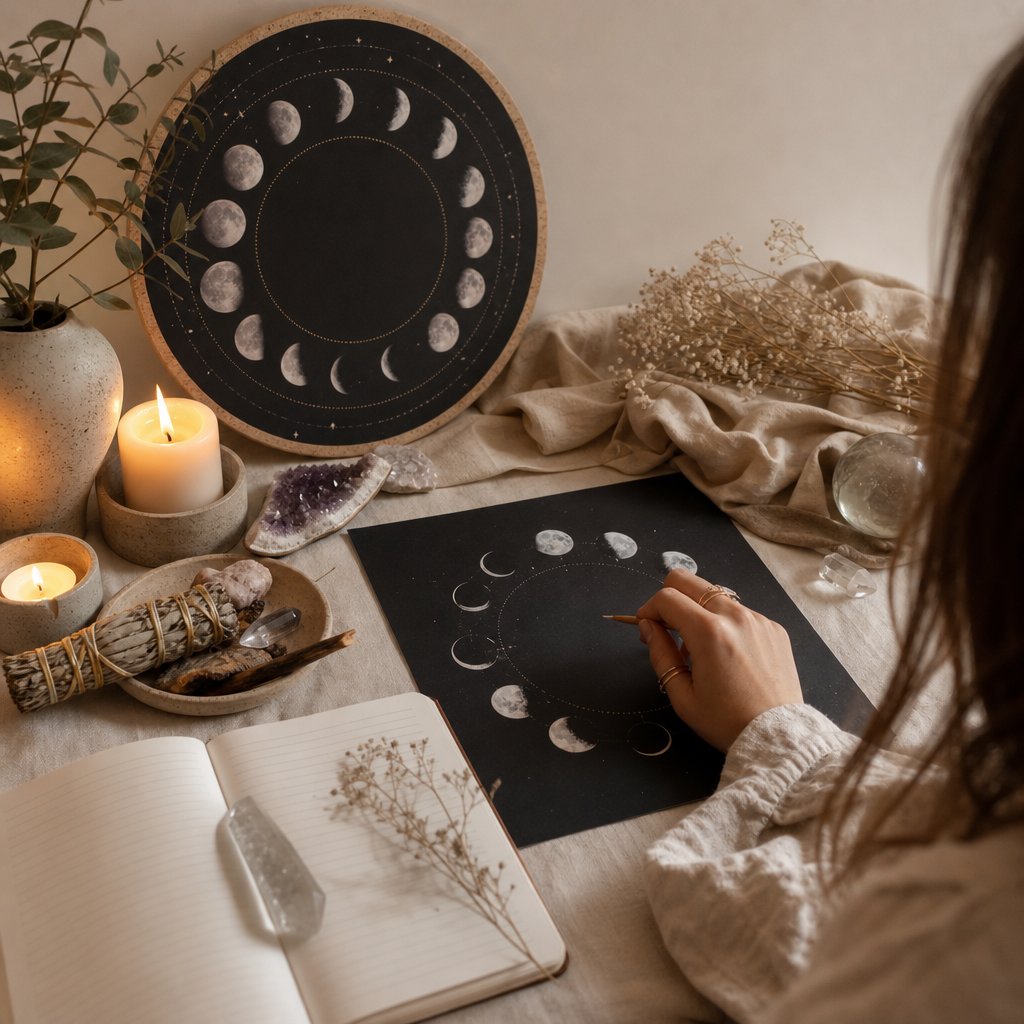
Moon phase rituals are simple, repeatable practices timed to the eight stages of the lunar cycle, from the dark new moon to the quiet waning crescent. Each phase carries a different mood, and pairing your reflection, intention-setting, or release work with that mood gives your month a natural rhythm instead of a blur of identical days. You don’t need a backyard, a coven, or years of study to start. All it takes is a few quiet minutes, something to write with, and a little curiosity about what the sky is doing above you. This guide walks through every phase, what it’s traditionally associated with, and how to build a simple practice around it whether you’re doing this alone or with a partner.
At a glance
- Time needed: 10 to 30 minutes per ritual
- What you need: journal, candle, optional moon water jar, a few crystals
- Best timing: in the evening, timed to the current moon phase
- Ideal for: both solo practitioners and couples
What Are Moon Phase Rituals?
Moon phase rituals are small, intentional practices, like journaling, lighting a candle, or setting an intention, that are timed to match a specific stage of the moon’s roughly 29-day cycle. The idea is reflective rather than scientific: each phase is treated as a symbolic prompt for a different kind of inner work, such as starting something new at the new moon or letting go at the last quarter. Think of it less as a rule system and more as a seasonal calendar for your inner life. Many people find that having a recurring structure, tied to something visible in the sky, makes consistent reflection easier than relying on willpower alone. These practices are a tool for personal growth and connection, not a substitute for professional mental health or relationship support when those are needed.

How Do You Find The Current Moon Phase?
The quickest way is a moon phase app or a quick search, both update daily and show you exactly where the moon is in its cycle. If you prefer a government source, NASA’s Moon page offers a reliable, free lunar calendar you can check anytime.
What If It’s Cloudy?
You don’t need to see the moon to work with its phase; the cycle continues whether or not clouds are in the way. Keep a printed or digital lunar calendar on hand so you can plan your moon phase rituals around the dates rather than the view. A phone reminder set a day or two in advance works just as well as watching the sky.
New Moon Rituals: Setting Intentions In The Dark
The new moon is traditionally treated as a blank page, a good time to write down what you want to call in for the coming month. A simple new moon ritual might involve lighting a candle, writing three intentions, and reading them aloud once before folding the paper away. For a deeper dive into this phase alone, see New Moon Intention Setting Rituals: A Gentle Guide to Starting Fresh Each Month, which walks through prompts and timing in more detail.
Waxing Moon Rituals: Taking Action On Your Intentions
The waxing moon, from crescent through gibbous, is the building phase, a time to take concrete steps toward whatever you named at the new moon. This is less about reflection and more about momentum: sending the email, booking the appointment, starting the habit.
Waxing Crescent: First Steps
Pick one small, doable action tied to your new moon intention and do it this week. It doesn’t need to be dramatic, a single phone call or five minutes of research is enough to mark the start of movement.
First Quarter: Facing A Decision
The first quarter moon often lines up with a choice point or an obstacle. Journal on what’s actually standing in your way, then pick one adjustment to make rather than abandoning the goal entirely.
Waxing Gibbous: Refining The Plan
This is the tweak-and-trust stage. Review what’s working, drop what isn’t, and resist the urge to start something brand new this close to the full moon.
Full Moon Rituals: Release And Celebration
Full moon rituals typically focus on two things at once: celebrating progress and releasing what no longer serves you. A common practice is writing down what you’re ready to let go of, then safely burning or tearing the paper as a symbolic release.
A Simple Full Moon Release Practice
Light a candle, name one thing you’re proud of this month, then write one thing you’re releasing on a separate slip of paper. Many people also set out jars of water or crystals under the full moon’s light overnight, intending them as a symbolic cleansing rather than a literal purification.
Waning Moon Rituals: Gratitude, Letting Go, And Rest
The waning moon, from gibbous through crescent, is a slow exhale, a stretch for gratitude, tying up loose ends, and genuine rest rather than new effort. This phase is often the most skipped part of moon phase rituals, yet it’s where a lot of the actual integration happens.
Waning Gibbous: Gratitude
Write three specific things you’re thankful for from the past two weeks. Being specific matters more than being profound, name the actual moment, not just a vague feeling.
Last Quarter: Letting Go
Use this phase to forgive a small grudge, cancel a commitment that’s draining you, or clear physical clutter. It’s a natural checkpoint for releasing anything you’ve been carrying out of habit rather than choice.
Waning Crescent: Rest
This is the lowest-energy phase of the month, and it’s meant to be. Keep your ritual minimal, a few slow breaths, a short journal entry, or simply an early night, rather than pushing for more output.
Moon Phase Rituals For Couples
Couples can use the same eight phases as a shared monthly check-in rhythm, pairing new moon intentions with a joint conversation about shared goals, and full moon releases with an honest talk about what’s been weighing on the relationship. This gives partners a built-in, low-pressure reason to talk regularly instead of waiting for a conflict to force the conversation. For a full framework built specifically for two people, see Moon Phase Couples Rituals: A Gentle Guide to Syncing Your Relationship with the Sky. If communication is the part you want to focus on, Moon Phase Communication Rituals: A Gentle Monthly Guide for Couples offers phase-by-phase conversation prompts. And for couples who want to bring more closeness and physical connection into the cycle, Intimacy Rituals for Couples Synced with Moon Phases: A Gentle Monthly Practice is worth exploring as a companion piece.
Simple Tools For Any Moon Phase Ritual
You only need a few basic items to practice moon phase rituals consistently: a journal, a candle, and optionally a small jar for moon water or a crystal or two.
Moon Water
Leave a sealed jar of water on a windowsill or outdoors overnight during the full moon, then use it to water plants or add a splash to a bath. Treat it as a symbolic gesture of renewal rather than a product with any proven physical effect.
Charging Crystals
Place a crystal on a windowsill during the full moon if you keep one, this is a traditional practice of symbolic cleansing, not a claim about the stone’s properties. Any flat surface that gets moonlight works fine, no special altar required.
Moon Journaling And A Small Altar
A moon journal can be as simple as a notebook with one page per phase. If you want a visual anchor, a small altar, even just a shelf with a candle and a photo or two, gives your moon phase rituals a consistent physical space, which matters more in a studio apartment or shared living situation than you might expect. No outdoor access is needed; a windowsill or even a single shelf works.
A Quick 10-Minute Moon Phase Ritual For Each Phase
If you’re short on time, each phase can be distilled into a single short practice: new moon, write one intention; waxing moon, take one small action step; full moon, name one thing to release; waning moon, write one gratitude and rest. This stripped-down version still keeps the rhythm of moon phase rituals going even during a busy month.
Common Beginner Mistakes With Moon Phase Rituals
The most common mistake is trying to do an elaborate ritual every single phase and burning out within two months. Start with just one phase, usually the new or full moon, and add others once that habit feels steady.
Other Pitfalls To Avoid
Skipping the waning phases entirely is another common error, since rest and release are just as important as setting intentions. Treating the ritual as a guarantee of outcomes, rather than a reflective practice, can also lead to disappointment; moon phase rituals are a tool for self-awareness, not a promise about how your life will unfold.
A Simple Monthly Moon Ritual Routine Example
A realistic month might look like this: a 15-minute intention-setting session at the new moon, a quick 5-minute check-in at the first quarter, a full moon release ritual with your partner or alone, and a quiet gratitude journal entry at the last quarter. If old emotional patterns or nervous system tension tend to surface during this monthly rhythm, Nervous System Regulation Through Lunar Cycles: A Gentle Monthly Rhythm for Your Body offers a complementary practice for calming the body alongside these rituals. If what comes up feels bigger than a monthly ritual can hold, especially grief, past trauma, or relationship distress, a licensed counselor or a crisis line like 988 is the right resource, and reaching out is a sign of strength, not a step outside this practice.
FAQ
Do I need to see the actual moon for moon phase rituals to work?
No. The lunar cycle continues regardless of clouds. Use a moon phase calendar or app to track the phases and time your rituals accordingly.
Can I start moon phase rituals in the middle of a cycle?
Yes. Begin with the current phase instead of waiting for the next new moon. Just note the date to track the full cycle going forward.
How long should a moon phase ritual take?
Most rituals take 10 to 30 minutes. Even a quick 5-minute journal entry during busy phases keeps your monthly rhythm intact.
Are moon phase rituals religious?
No. They're secular, reflective practices drawn loosely from folk traditions. Adapt them to your beliefs or skip elements that don't resonate with you.
What if I miss a phase or forget to do my ritual?
Simply continue with the next phase. Consistency over months matters far more than perfection in any single cycle.
Can couples do moon phase rituals if only one partner is interested in astrology?
Yes. The practice works as a monthly check-in and quality time ritual regardless of shared belief. The shared rhythm is what matters most.
Written by Hermes Trismegistus. Hermes Trismegistus is the pen name of the Inner Circle Rituals editorial team, inspired by the legendary sage of ancient astrology and Hermetic wisdom. We write simple, meaningful rituals for spiritual wellness, moon cycles and stronger relationships.
This article is for informational and inspirational purposes only and is not a substitute for professional medical, mental health, legal, or financial advice. Always consult a qualified professional for guidance specific to your situation.