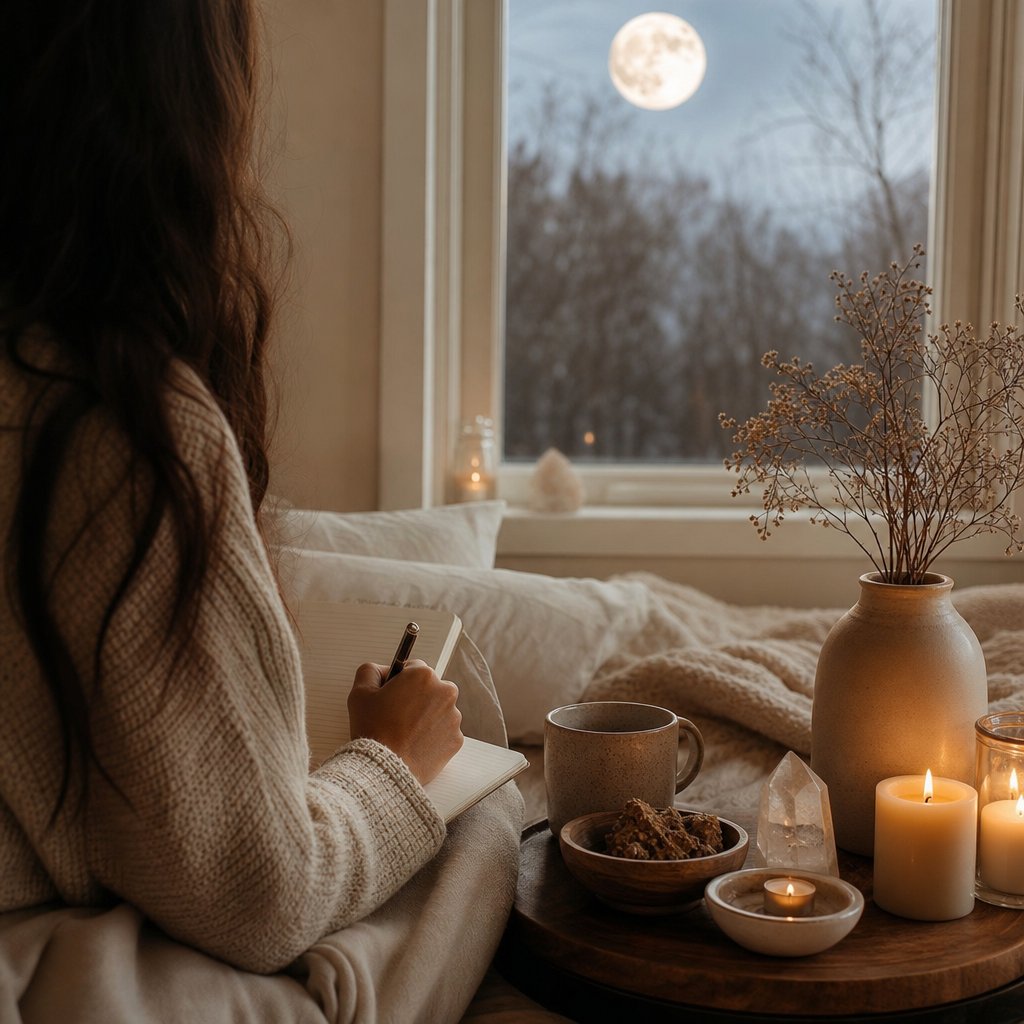
A cold moon ritual is a quiet practice timed to December’s full moon, the last full moon of the year, meant to help you slow down, release what’s heavy, and settle into the stillness of winter. It doesn’t require special training or expensive tools, just a bit of intention and a willingness to sit with the season instead of rushing past it. If you’re new to working with lunar timing, the Moon Phase Rituals: A Complete Guide to Working With Every Phase of the Lunar Cycle is a good place to understand how this practice fits into the broader lunar calendar.
December often arrives loud: holidays, deadlines, family gatherings, and a long list of things to wrap up before the year ends. A cold moon ritual offers a deliberate pause inside all of that noise. It’s less about ceremony and more about giving yourself permission to stop, breathe, and ask what you’re ready to set down before a new year begins.
This guide walks through what the Cold Moon represents, how to prepare a simple ritual space, a step-by-step practice you can adapt, and a version for couples who want to mark the season together.
At a glance
- Time needed: 20-30 minutes
- What you need: candle, journal, pen, small bowl of water, optional warm blanket or tea
- Best timing: night of the December full moon, or the two days surrounding it
- Ideal for: solo, couples
What Is The Cold Moon And Why Does It Matter?
The Cold Moon is the traditional name for December’s full moon, named for the long, dark nights and dropping temperatures that arrive at this point in the year. It typically falls in mid-to-late December, close to the winter solstice, which gives it a natural association with endings, rest, and turning inward.
In many folk calendars, full moon names came from seasonal markers, weather patterns, harvests, or animal behavior, rather than from any single culture or tradition. The Cold Moon name reflects the simple reality of the season: shorter days, colder nights, and a pull toward slowing down. You can check exact full moon dates and times from NASA if you want to time your practice precisely.
Spiritually, many people treat this moon as an invitation to reflect on the closing year rather than launch something new. It sits in contrast to new moon energy, which tends to favor fresh starts, this is a moment better suited to release, gratitude, and quiet reckoning.
What You Need For A Cold Moon Ritual
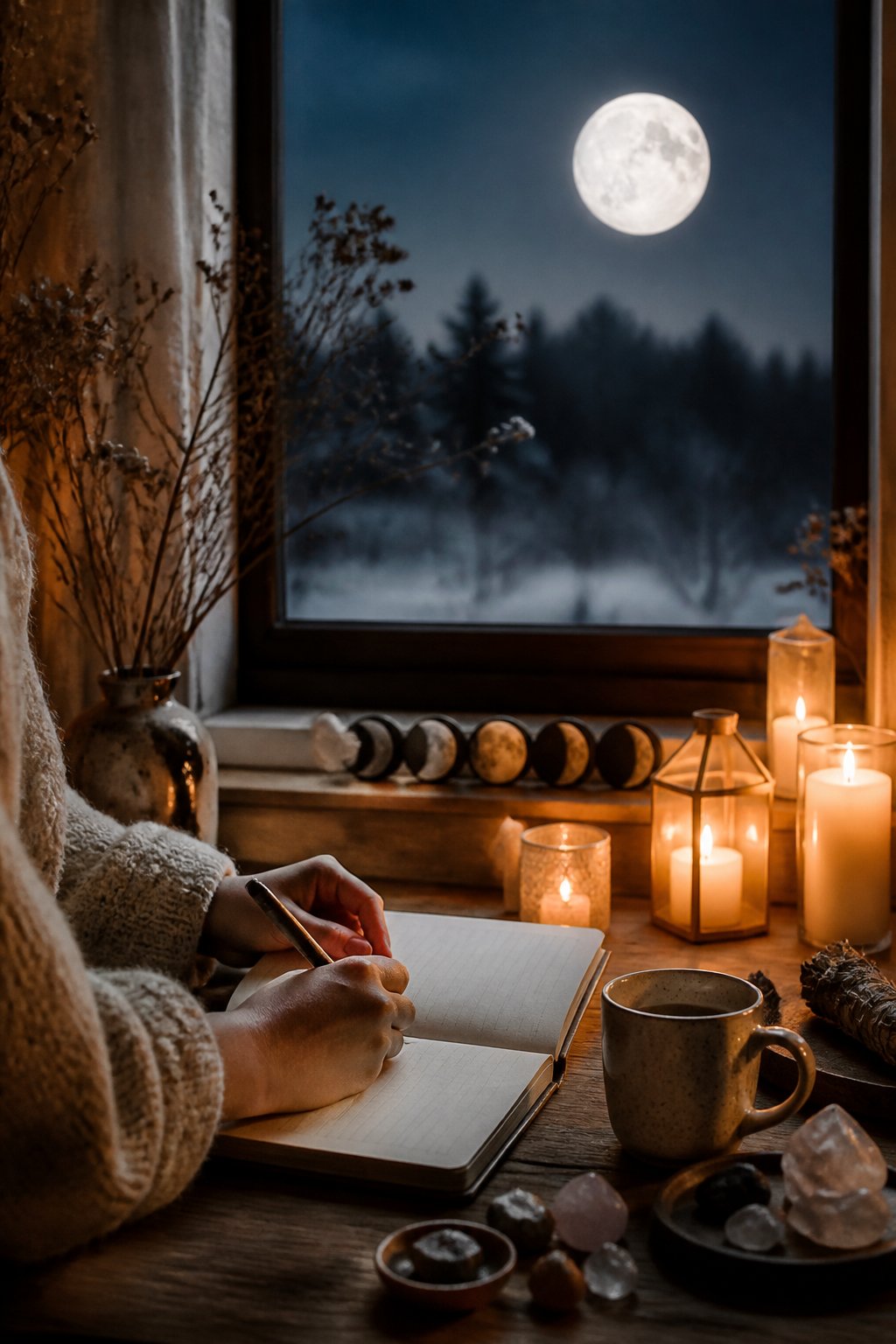
You need very little: a candle, a journal and pen, a small bowl of water, and about 20 to 30 minutes of uninterrupted time. Everything else is optional and can be adjusted to fit your space, budget, and comfort level.
A warm blanket or a cup of tea can help you settle in, since part of this practice is about physical comfort during a cold, dark time of year. If you want to add scent, a simple pine, cedar, or clove candle echoes the season without needing anything elaborate or expensive.
None of these items are required for the ritual to feel meaningful. The practice works just as well with a single candle and a notebook as it does with a full altar setup.
How To Do A Cold Moon Ritual Step By Step
Start by finding a quiet spot, lighting your candle, and taking a few slow breaths before you do anything else. This short pause matters more than any specific prop or phrase, it’s what shifts you out of autopilot and into the ritual itself.
Once you feel settled, work through these steps at your own pace.
1. Name What You’re Releasing
Open your journal and write down what you’re ready to let go of as the year closes, a habit, a worry, a version of yourself you’ve outgrown. Keep it specific rather than vague; naming something clearly makes it easier to actually release.
2. Sit With The Water Bowl
Place your hands near the bowl of water and imagine it absorbing whatever you’ve named. Water is often used in release practices as a symbol of carrying things away gently, without force or struggle.
3. Write One Thing You’re Grateful For
Balance the release with a short note on something from this past year worth keeping. This isn’t about forcing positivity, it’s about giving the year a fuller, more honest ending.
4. Close With A Few Quiet Minutes
Sit with the candle lit for a few more minutes before blowing it out. When you’re ready, pour the water outside or down a drain as a small, physical gesture of closing the ritual.
Cold Moon Ritual For Couples
A shared cold moon ritual works best as a quiet, low-pressure conversation rather than a scripted ceremony. Sit together near the candle, each write down one thing you’re releasing from the year and one thing you appreciated about your partner, then read them aloud if you both feel comfortable.
This pairs naturally with other seasonal practices; if you want a longer shared evening, the Winter Solstice Couples Ritual and Intimate Reconnection: A Guide for the Longest Night offers a fuller structure for the same stretch of the calendar.
Keep expectations gentle. The goal isn’t a deep processing session, it’s a small, shared moment of honesty before the year turns over.
Cold Moon Correspondences And Symbolism
Traditional correspondences for this moon lean toward winter elements: evergreen branches, white or silver candles, water, and stones like clear quartz or moonstone. These aren’t required materials, they’re optional symbols some people like to include if they enjoy building a small seasonal altar.
Color-wise, white, silver, and deep blue are common choices, echoing frost and long winter nights. None of these additions change the ritual’s effect, they simply add a layer of seasonal atmosphere if that appeals to you.
Journaling Prompts To Use After Your Ritual
A few written prompts right after your ritual help you carry its reflection into the days ahead instead of letting it fade. Try one or two of these rather than all of them, so the practice stays simple.
What am I most ready to leave in this year? What pattern do I want to interrupt before the new one begins? What’s one small thing I did this year that I’m proud of, even if no one noticed? Keep your answers short; a few honest sentences are more useful than a long, polished entry.
A Gentle Note On Timing And Expectations
Treat a cold moon ritual as a reflective practice rather than a guaranteed fix for stress, grief, or relationship strain. It can offer a helpful pause, but it isn’t a substitute for professional support when something feels heavier than a seasonal check-in can hold.
If you’re moving through grief, a difficult loss, or a relationship struggle that feels unmanageable, a licensed therapist or counselor is the right resource for that kind of support, and a ritual like this works best alongside that care, not in place of it.
FAQ
When exactly is the Cold Moon each year?
The Cold Moon is December's full moon, typically falling in mid-to-late December. Check a lunar calendar each year since exact dates shift slightly.
Can I do a cold moon ritual if I'm not religious or spiritual?
Yes. Use it as a secular reflection practice to review the year and set intentions, skipping any spiritual language if you prefer.
What if I miss the exact night of the full moon?
The cold moon's energy extends a day or two on either side of the peak, so performing your ritual within that window works well.
Do I need an altar or special tools?
No. A candle, journal, and quiet time are enough. Crystals or herbs are optional additions, not requirements.
How is the Cold Moon different from a new moon ritual?
New moon rituals focus on starting fresh, while cold moon rituals emphasize closing, releasing, and reflecting on what's already happened.
Can couples do this ritual if they're new to moon-based practices?
Yes. Keep it short and low-pressure—a quiet shared moment is the goal, not perfect execution.
Written by Hermes Trismegistus. Hermes Trismegistus is the pen name of the Inner Circle Rituals editorial team, inspired by the legendary sage of ancient astrology and Hermetic wisdom. We write simple, meaningful rituals for spiritual wellness, moon cycles and stronger relationships.
This article is for informational and inspirational purposes only and is not a substitute for professional medical, mental health, legal, or financial advice. Always consult a qualified professional for guidance specific to your situation.